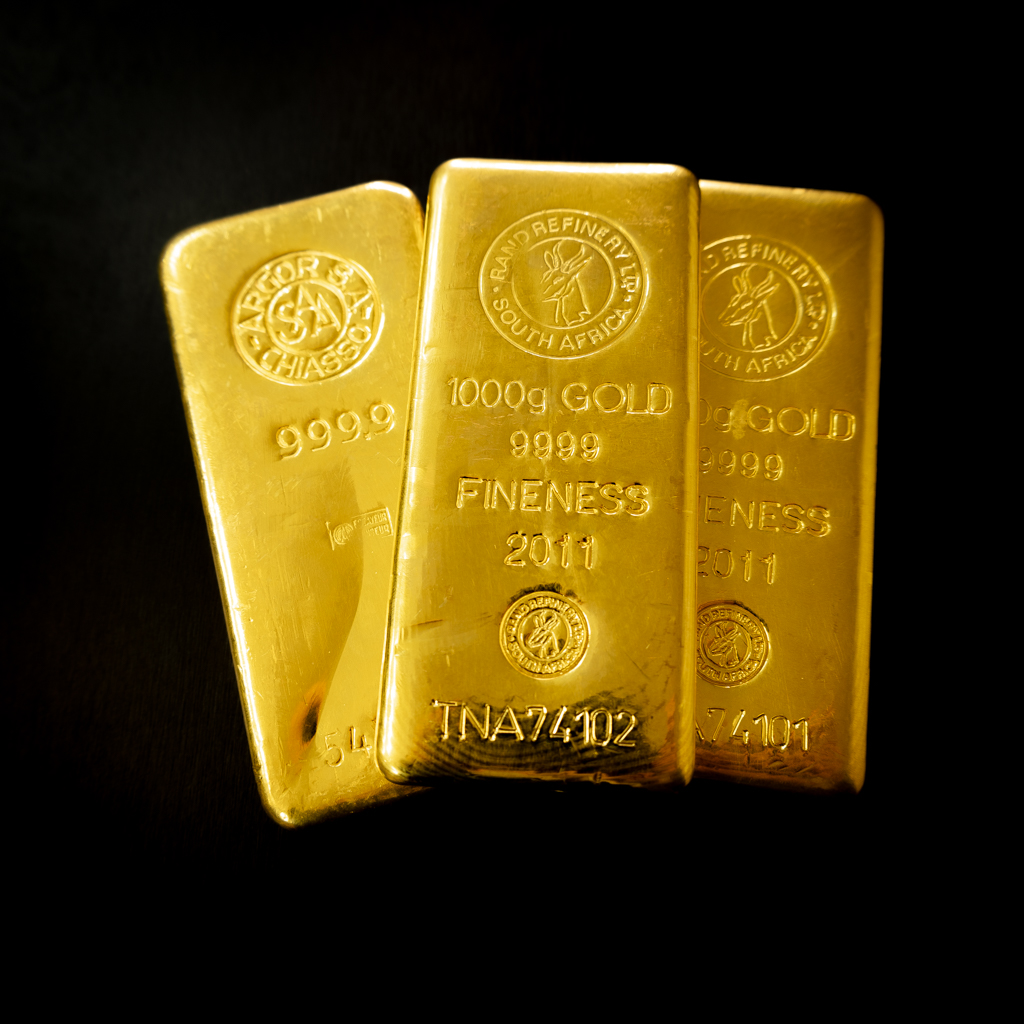

And if gold exceeded $3,000!
What if gold surpassed $3,000? Gold, the ultimate safe-haven asset, is the subject of much speculation as to its upside potential.
What if gold surpassed $3,000? Gold, the safe-haven par excellence, is the subject of much speculation as to its upside potential. While the precious metal recently broke through all-time highs, topping $2,000 an ounce, some analysts are now talking about the possibility of an ascent to $3,000. Here's an analysis of the factors that could lead to such a scenario and its potential implications.
Catalysts for a historic rise
Unstable geopolitical context
Current geopolitical tensions, notably the conflicts in Ukraine and the Middle East, are creating a climate of uncertainty conducive to gold's revaluation. Investors traditionally seek refuge in the yellow metal in times of crisis, as the history of the financial markets testifies.
Monetary policy and inflation
The monetary policy of the main central banks, particularly that of the US Federal Reserve (Fed), plays a crucial role. Despite the relative containment of inflation in developed economies, fears of a resurgence of inflation persist. As gold is seen as a hedge against inflation, this situation could support its valuation.
Growing demand from central banks
Central banks, particularly those in emerging countries, have significantly increased their gold purchases in recent years. This trend is part of a strategy to diversify reserves and reduce dependence on the US dollar. According to the World Gold Council, gold purchases by central banks reached record levels in 2023.
Technical factors supporting the $3,000 thesis
Analysis of historical cycles
A study of gold price cycles reveals periods of strong appreciation followed by phases of consolidation. The current technical configuration bears similarities to the periods preceding major historical price rises, notably that of 2011, which saw gold reach $1,920 per ounce.
Gold/share ratio
The ratio between the price of gold and the main stock market indices suggests that the precious metal may be undervalued relative to equities. An equity market correction, combined with renewed interest in safe havens, could catalyze a significant rally.
Limited supply and production constraints
Global gold production faces structural constraints:
- Progressive depletion of easily exploitable deposits
- Increased extraction costs
- Long lead times for the development of new mining projects
- Growing environmental concerns limit mining expansion
Impact on the global economy
A dramatic rise in the price of gold would have a major impact on the global economy. Gold-exporting countries, such as Australia and Canada, could see their economies benefit from an influx of foreign currency, but this could also lead to inflation in production costs. Gold-importing countries, on the other hand, could face higher import costs, which could affect their balance of trade.
- For gold producers: Gold-producing countries such as South Africa, Russia and Australia would see an increase in their revenues. This could boost their local economies, but could also increase the environmental and social tensions associated with gold mining.
- For consumers: Rising gold prices are likely to have an impact on sectors where gold is used, such as jewelry and electronics. Gold jewelry prices would rise, making these luxury items even more inaccessible for many people.
Consequences for investors
For investors, a rise in the price of gold could represent an investment opportunity. However, it could also lead to increased volatility in financial markets. Investors could turn more to gold as a safe-haven asset, which could lead to a decline in investment in other assets such as equities and bonds.
- Future of gold investment: A gold price above $3,000 would reinforce its position as a safe-haven asset. Investors may turn more to gold in times of economic uncertainty, which could reduce investment in other assets such as equities and bonds.
- Market volatility: Such a rise could also increase the volatility of financial markets. Gold could become an even more speculative asset, leading to significant price fluctuations.
Political implications
The price of gold is often influenced by geopolitical tensions. A dramatic rise could be the result of international conflicts or major economic crises. It could also lead to increased military spending, as governments seek to secure their gold reserves.
- International tensions: The price of gold is often influenced by geopolitical tensions. A significant rise could signal major economic crises or international conflicts, which could exacerbate tensions between nations.
- Monetary policies: Central banks could adjust their monetary policies in response to a drastic rise in the price of gold. This could include changes to interest rates or intervention in currency markets.
Social impact
In social terms, a rise in the price of gold could have a variety of effects. Gold mine workers could benefit from higher wages, but this could also lead to harsher working conditions and negative environmental impacts. What's more, a rise in the price of gold could make it unaffordable for many consumers, affecting the jewelry and technology industries.
In conclusion, a rise in the price of gold to $3,000 an ounce would have far-reaching and varied implications for the global economy, investors, politicians and society in general. While this may represent an opportunity for some, it could also bring significant challenges for others.
- Social impacts: A significant rise in the price of gold could lead to more difficult working conditions in the mines, and potentially an increase in illegal gold mining.
- Environment: Increasing gold production to meet demand could have negative environmental consequences, such as deforestation and river pollution.
A gold price of $3,000 an ounce, while spectacular, cannot be ruled out given the current context. This projection is based on solid fundamentals and long-term trends. However, such a move would probably require a combination of several favorable factors, and could be accompanied by significant volatility.
Investors and economic players must therefore remain vigilant and adopt a balanced approach to their exposure to gold. Prudent diversification and in-depth analysis of risk factors remain essential in any investment strategy.