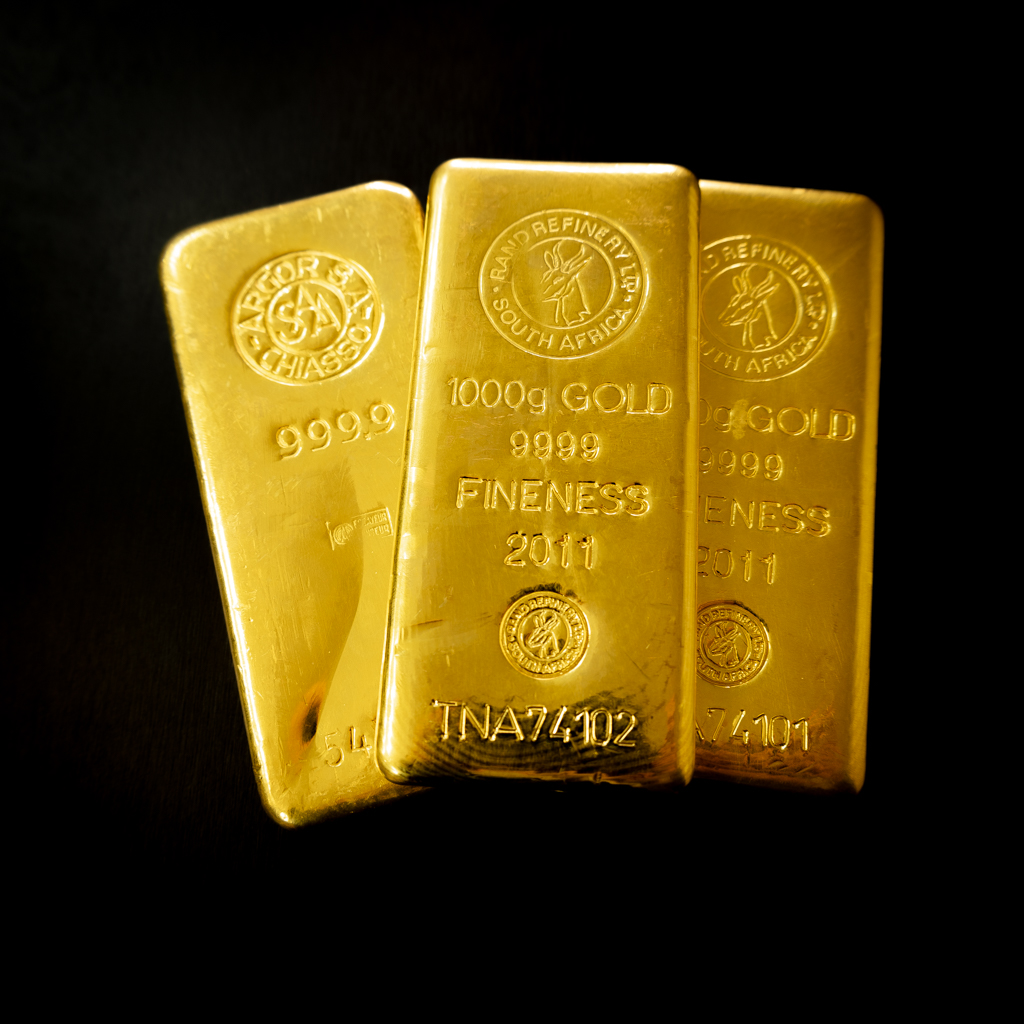

Is the Sovereign worth investing in?
Is the Sovereign worth investing in?
How about a closer look at numismatics across the Channel? Do you know the sovereign gold coin? It corresponds to the 20 Franc Napoleon coin in France. Like the Latin Union, our British friends are starting to mint their own gold coins. In the UKèces gold are particularly popular. They are considered an investment par excellence thanks to their longevity and popularity, as their value remains close to the price of gold. We tell you more about this beautiful investment coin in this article.
A little history, the creation of the Sovereign
In the UK, the sovereign coin was created during the reign of Henry VII, first minted in 1489. Until 1603, no face value was struck on gold sovereigns. Only various monarchs, such as Edward I and Queen Victoria, were featured.
In a previous article, Selling and buying20 franc gold coins in Wallonia, we talked about the history and different vintages of the Leopold I, Napoleon and Vreneli. The Union Latine 20 francs gold coins correspond to the sovereign gold coins.
Sovereign gold coins, considered modern, began to be minted in 1817, during the reign of King George III, after the victory over Napoleon. It was from this date onwards that gold coins were minted in their nominal value of one pound sterling, at the Royal Mint. It was during a monetary reform that the total weight, gold weight and diameter of the sovereign were definitively fixed.
In 1914, production of the sovereign was halted due to the war. Gold sovereigns continued to be struck in different workshops around the world until 1932, identified by a letter on the coin: Melbourne (M), Perth (P), Sydney (S), Bombay (I), Ottawa (C) and the last George V Gold Sovereign was struck in 1932 in Pretoria, South Africa (SA).
In 1957, the Royal Mint decided to resume minting gold sovereigns. These were then intended for investment purposes only.
The Souverain has different face values. Each coin contains a certain amount of gold.
Example of Golden Sovereign - William IV
Sovereign William IV coins were issued from 1831 to 1837 by the Royal Mint of the United Kingdom.
How about a closer look at numismatics across the Channel? Do you know the sovereign gold coin? It corresponds to the 20 Franc Napoleon coin in France. Like the Latin Union, our British friends are starting to mint their own gold coins. In the UKèces gold are particularly popular. They are considered an investment par excellence thanks to their longevity and popularity, as their value remains close to the price of gold. We tell you more about this beautiful investment coin in this article.
A little history, the creation of the Sovereign
In the UK, the sovereign coin was created during the reign of Henry VII, first minted in 1489. Until 1603, no face value was struck on gold sovereigns. Only various monarchs, such as Edward I and Queen Victoria, were featured.
In a previous article, Selling and buying20 franc gold coins in Wallonia, we talked about the history and different vintages of the Leopold I, Napoleon and Vreneli. The Union Latine 20 francs gold coins correspond to the sovereign gold coins.
Sovereign gold coins, considered modern, began to be minted in 1817, during the reign of King George III, after the victory over Napoleon. It was from this date onwards that gold coins were minted in their nominal value of one pound sterling, at the Royal Mint. It was during a monetary reform that the total weight, gold weight and diameter of the sovereign were definitively fixed.
In 1914, production of the sovereign was halted due to the war. Gold sovereigns continued to be struck in different workshops around the world until 1932, identified by a letter on the coin: Melbourne (M), Perth (P), Sydney (S), Bombay (I), Ottawa (C) and the last George V Gold Sovereign was struck in 1932 in Pretoria, South Africa (SA).
In 1957, the Royal Mint decided to resume minting gold sovereigns. These were then intended for investment purposes only.
The Souverain has different face values. Each coin contains a certain amount of gold.
Example of Golden Sovereign - William IV
Sovereign William IV coins were issued from 1831 to 1837 by the Royal Mint of the United Kingdom.
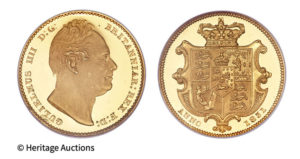
On the obverse, the Sovereign William IV coin from 1831 to 1837 features the effigy of William IV facing right, with the inscription "GULIELMUS IIII D:G: BRITANNIAR:REX F:D:". The reverse features the Royal Coat of Arms of Great Britain.
This coin has a special feature! It's the first sovereign to have a "medal strike" orientation. In other words, the two sides of the coin face the same direction; they are not inverted like the strikes on previous Sovereign coins.
| Features Gold Sovereign from 1831 to 1837 - Wilhelm IV | |
| Transmitter | United Kingdom |
| King | William IV (1830-1837) |
| Type | Part courante |
| Dates | 1831-1837 |
| Value | 1 book |
| Currency | Pound sterling |
| Composition | Gold 916.7‰ |
| Weight | 7,99 g |
| Diameter | 22 mm |
| Shape | Round |
| Technical | Press stroke |
| Orientation | Coinage ↑↑ |
| Demonetized | Yes |
| Number | N# 12807 |
| References | KM# 717, Sp# 3829 |
There are other sovereign coins depending on the minting date and the representations on the coins:
- Sovereign Gold George III struck in 1817
- Sovereign Gold George IV struck in 1821
- Gold Sovereign Elizabeth II minted from 1957 to 1968
- Sovereign Gold Elizabeth II from 1974 to 1984
- Sovereign Gold Elizabeth II from 1985 to 1997
- Sovereign Gold Elizabeth II since 1998
For your investment project, the choice of sovereign gold coins needs to be carefully considered to save in total security. For this, it's best to call on professionals in gold buying and selling. CaraOr will help you study your needs and answer all your questions. Our experts welcome you to pleasant, secure premises in Liège and Rixensart in Wallonia. Make an appointment with CaraOr!
On the obverse, the Sovereign William IV coin from 1831 to 1837 features the effigy of William IV facing right, with the inscription "GULIELMUS IIII D:G: BRITANNIAR:REX F:D:". The reverse features the Royal Coat of Arms of Great Britain.
This coin has a special feature! It's the first sovereign to have a "medal strike" orientation. In other words, the two sides of the coin face the same direction; they are not inverted like the strikes on previous Sovereign coins.
| Features Gold Sovereign from 1831 to 1837 - Wilhelm IV | |
| Transmitter | United Kingdom |
| King | William IV (1830-1837) |
| Type | Part courante |
| Dates | 1831-1837 |
| Value | 1 book |
| Currency | Pound sterling |
| Composition | Gold 916.7‰ |
| Weight | 7,99 g |
| Diameter | 22 mm |
| Shape | Round |
| Technical | Press stroke |
| Orientation | Coinage ↑↑ |
| Demonetized | Yes |
| Number | N# 12807 |
| References | KM# 717, Sp# 3829 |
There are other sovereign coins depending on the minting date and the representations on the coins:
- Sovereign Gold George III struck in 1817
- Sovereign Gold George IV struck in 1821
- Gold Sovereign Elizabeth II minted from 1957 to 1968
- Sovereign Gold Elizabeth II from 1974 to 1984
- Sovereign Gold Elizabeth II from 1985 to 1997
- Sovereign Gold Elizabeth II since 1998
For your investment project, the choice of sovereign gold coins needs to be carefully considered to save in total security. For this, it's best to call on professionals in gold buying and selling. CaraOr will help you study your needs and answer all your questions. Our experts welcome you to pleasant, secure premises in Liège and Rixensart in Wallonia. Make an appointment with CaraOr!