
The value of gold in history
The value of gold in history
The yellow metal has always had a strong symbolic value, ever since it was first discovered by man in the Chalcolithic era, towards the end of prehistory. The oldest object found made of gold dates back to 5,000 BC. Widely used for ceremonial purposes and then as currency, gold has a rich history that has evolved over time and through civilizations. How did gold evolve? What was gold worth in ancient Egypt? And 50 years ago? What can you buy with gold bullion today? A look back at the value of gold throughout history.
Gold and its use in civilizations
In the early days of gold, because of the technical difficulties involved in working the precious metal, gold was reserved for religious cults and was used for ceremonial purposes. In ancient Egypt, it was used to make amulets, scepters and death masks.
The Egyptians were among the first civilizations to exploit gold mines. In those days, the precious metal had no official monetary value or significance. It was simply sought-after as a commodity and because of its high desirability. It obviously increased in value over time, with only a small number of people considered important having access to it. The yellow metal was first smelted by Egyptian goldsmiths around 3,600 BC, and it was not until 1,000 years later that the first gold jewelryappeared.
In 550 BC, the Greeks also began to search for gold, particularly in the Mediterranean and the Middle East. It was the Romans who developed the mining technology of the Greeks. They invented the first hydraulic mines and improved underground mining methods. Around 121 BC, thegold Aureus was worth 25 silver denarii.
Gold and its role as currency
Gold naturally became a medium of exchange, replacing barter in ancient times. The yellow metal is at the origin of the concept of money as we know it today. The first gold coins were minted in 700 BC. But it was under the reign of Croesus, King of Lydia (present-day Turkey), around 565 BC, that the first mass-issue gold coins were made, which led to the development of trade. For the record, the expression "rich as Croesus" comes from this historic event. In fact, it was Croesus who established the equivalence between gold and silver: at that time, one gold coin was worth ten silver coins.
Gold as a currency then spread throughout the ancient world and became the international currency. In the Middle Ages, the Italians minted their first Gold Florins, and in France, Gold Francs. This is a 24-carat gold coin weighing 3.88 grams. Then came the Écus d'Or, the Louis d'Or, and... the first hallmarks. During the Revolution, 1 gram of gold was worth 15.5 grams of silver.
The precious metal continued to be used as currency in the West until 1973, when gold was dematerialized by a reform of the International Monetary System. In the early 1970s, an ounce of gold was worth 32 euros, giving you the choice of buying a new suit or a bicycle.
With the Bretton Woods Agreement, only the dollar became convertible into gold, while all other currencies were convertible into dollars. Gold and dollar rates were almost identical. Between 1971 and 1980, international conflicts and oil shocks influenced the price of gold, with the ounce rising from $35 to $850.
And what is Gold worth today?
Despite the Suprime crisis and the eurozone debt crisis, the price of gold has been rising for 20 years. An ounce of gold was worth 303 euros in January 2000, while in January 2020 it was worth 1,553 euros.
In the midst of the COVID-19 crisis, investors are turning to Gold to diversify their savings. Gold is worth 1,562 euros and 1,686 dollars an ounce in mid-April 2020. The highest gold price in dollar terms was 1,899 dollars an ounce in September 2011.
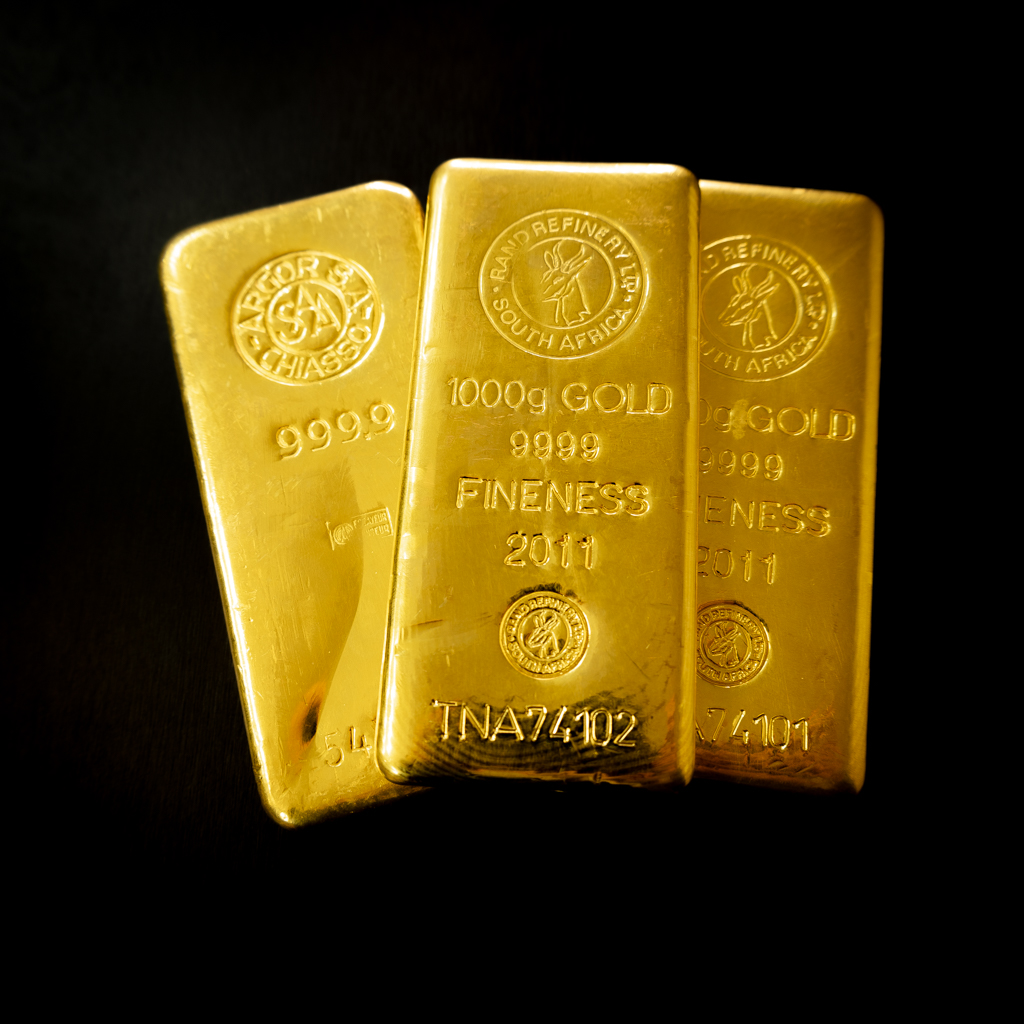
Today, to buy an 80m2 apartment in Paris, you need 16 1kg gold bars, whereas in 2008, you needed 28 for the same property, but only 1 to buy 3 80m2 apartments70 years ago. In April 2020, an LBMA "Good Delivery" ingot, weighing around 12kg, is worth €640,000.
Gold is at the origin of the first monetary systems and is the historical witness to the evolution of civilizations, punctuated by reigns, political coups and currency collapses. Historically, gold has served as a hedge against rising inflation and the fall of the euro. As you can see, the precious metal evolves in times of economic and geopolitical crisis and uncertainty. That's why gold is a shield against the currency, and why investors consider it a safe haven.
Source: https://www.loretlargent.info