
The de-dollarization of the world is underway. All profit for gold?
The de-dollarization of the world is underway. All profit for gold?
Over the past few years, we have witnessed a growing mistrust of the greenback. The share of world GDP expressed in dollars has fallen below 15% for the first time, after having long been above 20%. A slow movement has begun, in which gold will play a major role.
A little background
In July 1944, the Second World War was not quite over, but most nations were already thinking about post-war reconstruction. Wracked by the experience of the Great War and above all by the stock market and financial crisis of 1929, 44 states met at Bretton Woods in the United States to define the economic and monetary policy to be adopted once the armistice had been signed.
At the end of the three-week conference, two organizations were created: the International Bank for Reconstruction and Development(IBRD) and the International Monetary Fund(IMF). But the main decision to emerge from the Bretton Woods agreements was the organization of the world monetary system around the US dollar, with a nominal peg to gold.
By establishing the dollar as their currency of reference, the United States aimed to consolidate its dominant position in the world economy and, politically speaking, to establish its domination over war-torn European countries, preventing them from adopting policies too far to the left, or even tipping over into communism.
It was at Bretton Woods that the Gold-Exchange Standard was created, based on the US dollar alone. All currencies are defined in dollars, and only the dollar is defined in gold. This arrangement enabled the USA to play the role of monetary policeman during the 30 glorious years.
Unfortunately, the inflation resulting from the space race and the colossal expenses linked to the Vietnam War were to put paid to the provisions born at Bretton Woods at the time of the first oil shock. Countries exporting to the USA accumulated huge reserves of dollars, which gave them the right to issue equivalents in their own currencies, encouraging galloping inflation. Most countries demanded that the USA redeem their excess dollars in gold, but the USA opposed this, suspending the convertibility of the dollar into gold.
The extraterritoriality of the dollar
As a direct consequence of the Bretton Woods Agreement, the dollar has dominated international economic and financial exchanges ever since. Even today, the dollar is used for over 40% of payments worldwide, and accounts for over 60% of official foreign exchange reserves.
The United States has used the dollar and its hegemony in its own interests, turning it into a weapon of deterrence. This is how they have used the dollar to impose the extraterritoriality of their own law. An American judge can take advantage of the greenback to initiate legal proceedings on the grounds of a direct link to the United States. Thanks to this principle, the Americans can impose unilateral sanctions on companies and states that do not comply with their desiderata. Siemens, for example, was fined $800 million in 2008 for violating the U.S. Foreign Corrupt Practices Act.
Ukraine as a starting point?
Following the Russian-Ukrainian conflict over control of Crimea in 2013, the United States, again under the guise of extraterritoriality, harshly sanctioned the Russian state. Export taxes, trade bans and hefty fines for offenders were the "free" world's reprisals against Moscow.
These measures taken by the Obama administration did not please the master of the Kremlin, and were the start of a tense relationship with the United States and its greenback. This tension was echoed by the Chinese government, which was tired, to say the least, of always having to rely on the dollar, the currency of an economy far less flourishing than its own. What's more, the Chinese government intended to promote the use of the Yuan in the exchanges set up as part of the New Silk Roads.
So it was that the Russians and the Chinese sat down to consider an alternative to the dominance of the dollar, and the first trade treaty between the two powers was signed! This treaty enabled the Chinese to buy Russian oil by paying for it in Yuan, something unheard of at the time.
This first treaty was followed by many others, and now the dollar's share of trade between Russia and China has dropped below 50%, whereas it was still over 90% at the end of 2015.
The movement is spreading
The Chinese and Russians got the ball rolling, and were soon followed by other countries who also wanted to free themselves from the dollar. The Eurozone, Iran and India all intended to use their own currencies for energy trading. This move was further encouraged by Donald Trump's accession to the White House.
Under the guise of his slogan "Make America great again", the latter established a form of protectionism, favoring American companies at the expense of imports. While the results were beneficial in the short term, this policy contributed to a general resentment of the dollar.
This disavowal, encouraged by an ailing US economy in the wake of the Covid-19 health crisis and by a Biden administration announcing a 2,000 billion rescue plan, could accelerate the de-dollarization of the world.
With this in mind, a number of payment systems have been developed in recent years that allow international trade without being subject to American control. Swift is no longer the only platform in the world where these exchanges take place.
And what about gold?
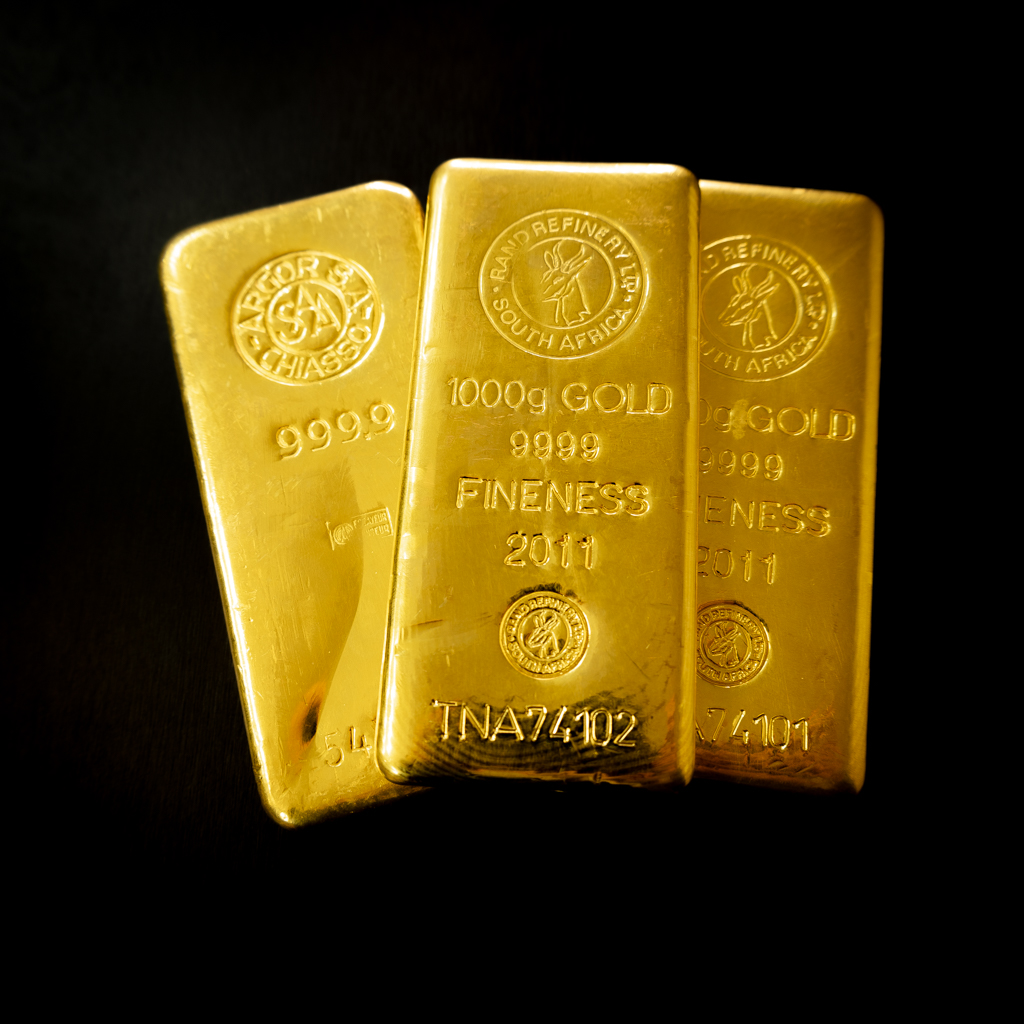
At the same time, we're witnessing an unprecedented gold rush. Russians and Chinese have massively increased their reserves, as have Eurozone countries, certain Asian countries and many others.
Let's take a closer look at China! Since the banking crisis of 2008, the Beijing government, through the People's Bank of China, has considerably increased its yellow metal reserves.
Of course, China has no intention of taking over the role played by the United States, and even less of backing the Yuan with gold. On the other hand, it is accumulating gold to bolster the credibility of its currency, for three reasons:
- Diversify its foreign exchange reserves. Gold represented only 3% of its foreign exchange reserves at the end of 2019.
- Exerting downward pressure on the Yuan exchange rate: to buy gold, China has to sell Yuan, which lowers the exchange rate.
- Last but not least: buying gold allows China to reinforce the credibility of its currency. The avowed aim is to bring the People's Republic into the club of countries whose currency has acquired reserve currency status. By doing so, China would have the privilege of financing its growth on credit, thanks to a public debt built up at a very low and practically unlimited rate.
While the Yuan does not yet account for much of the world's foreign exchange reserves, in 2016 it acquired the status of a major reserve currency from the IMF, to the detriment of the Euro.
For China, increasing its stock of yellow metal is essential if it wants the Yuan to become internationalized and thus carry more weight against its competitors.
If international trade becomes bipolar or multipolar, China's gold reserves will enable the Yuan to play a leading role in the new world monetary order.
To conclude
Of course, the world isn't built in a day, and the de-dollarization of global trade won't happen in a few months. It's a safe bet, however, that we're about to witness the advent of a multi-polar global economy in which the Dollar, Euro and Yuan will take the lion's share, provided the latter succeeds in its internationalization. Dollar and Yuan will then play their role as exchange currencies for energy and oil.
Of course, the price of gold and oil is not yet expressed in Yuan on the world's stock markets, and it won't be any time soon, but every revolution begins with a first step.
The "de-dollarization" of Europe and Asia will take time, and gold will play a key role. Any investor in the yellow metal will therefore be paying close attention.
Sources :
- Wikipedia: Bretton Woods agreements
- C'est cash" program, February 21, 2021: https: //www.youtube.com/watch?v=TUeiERUC_M8
- Article : La Chine achète de l'or, une première depuis plus de deux ans in Les Echos du 09/01/2019
- Article : La dédollarisation est la clé du prochain cycle in Le temps du 23/06/2019