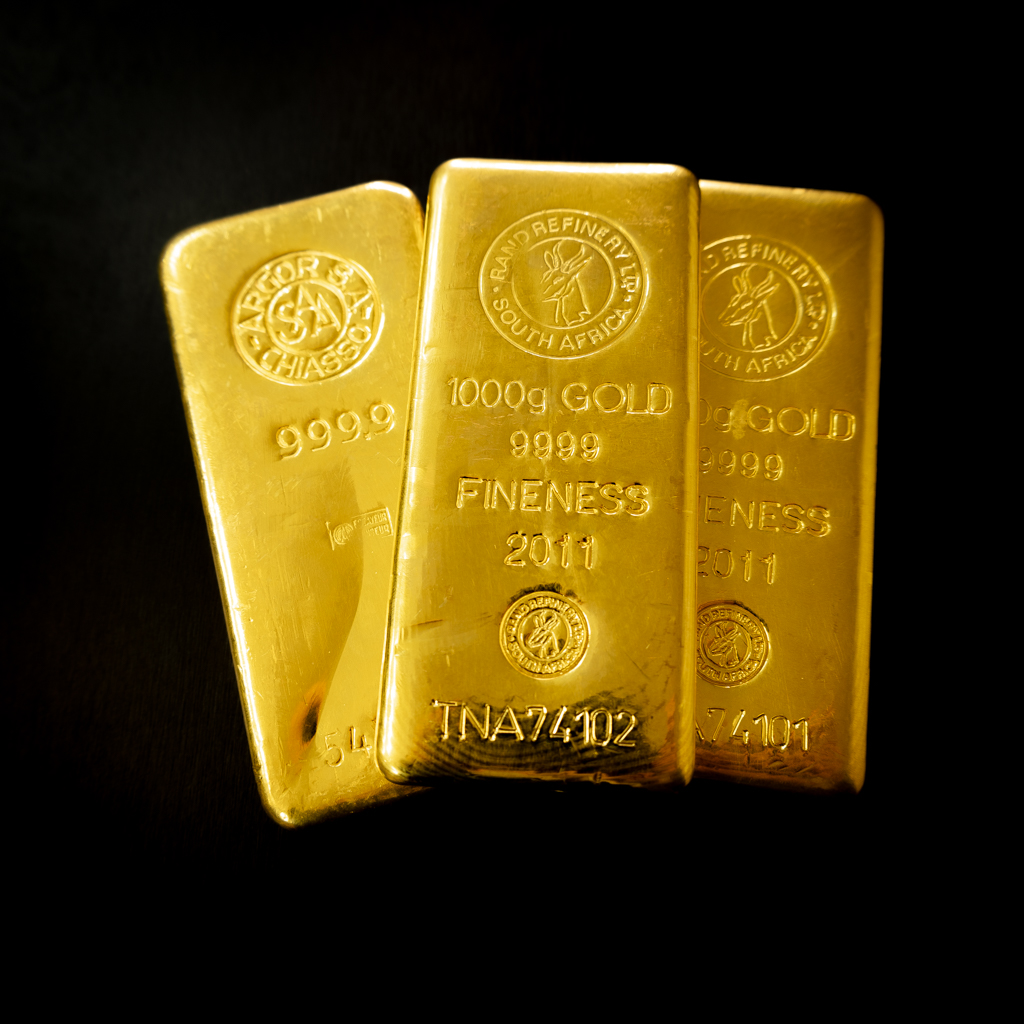

War in Ukraine: should you invest in gold?
On Thursday, February 24, 2022, the price of gold rose to $1,974 (or €1,760), its highest level since September 2020. As war broke out in Ukraine, invaded by Russian troops, investors preferred to bet on the yellow metal, considered a timeless safe-haven. As we all know, gold reacts to geopolitics, but is now the right time to invest?
Gold as a safe haven for decades
As you know, gold naturally became a medium of exchange, replacing barter in ancient times. In the West, the stainless metal was used as currency until 1973, with the reform of the International Monetary System and the Bretton Woods agreements.
Over the course of its history, gold has become a safe haven. It's an investment that secures your wealth in the face of political, economic, systemic and other crises.
While the US dollar and real estate were once safe havens, today gold remains the ultimate safe haven.
In every major crisis, investors seek refuge in gold, driving up its price. Between 1971 and 1980, for example, international conflicts and oil shocks influenced the price of gold. The yellow metal rose from $35 to $850. A more recent example is the COVID-19 health crisis, which is currently causing an economic crisis in countries around the world.
As you can imagine, geopolitical tensions and the Ukrainian crisis in February sent gold prices into a frenzy. Since February 24, the outbreak of war in Ukraine has been no exception. In times of crisis, investors turn to the yellow metal.
The Ukraine/Russia conflict and the price of gold
Since the beginning of February 2022, the price of gold has reacted to announcements from the Ukrainian border and diplomatic discourse between European leaders and Russia. The conflict between Ukraine and Russia has been accompanied by successive rises and falls in the price of gold.
An ounce of gold reached 1,577 euros on February 3. With geopolitical tensions between European leaders and Vladimir Putin sending military troops to Ukraine's borders, gold soared by 3.5% in the week up to February 10. The announcement of the withdrawal of Russian troops led to a drop in tensions and the price of gold to around 1,645 euros on February 11.
The next day, Saturday February 12, satellite photos taken by the Americans showed that Russian troops were intensifying at the gates of Ukraine. Biden announces "an imminent Russian invasion of Ukraine". This weekend is marked by diplomatic exchanges between the United States, Europe and Russia. Gold prices rise again.
On Tuesday February 22, Putin recognized two pro-Russian territories, Donetsk and Luhansk, in the Donbass region of Ukraine. On the same day, Ukraine announced the end of diplomatic relations with Russia and Air France cancelled flights to Kiev. Gold began to fall in the early hours of the morning, dropping from 1,690 to 1,670 euros an ounce.
But on Thursday, February 24, 2022, the day of Russia's military attack on Ukraine, the price of gold soared. The yellow metal, considered a safe-haven asset, is trading at $1,941.52, up 9.6% year-on-year. It will fall slightly with Friday's exchanges between diplomatic leaders.
Investing in gold for the long term
Gold reacts to geopolitics. However, the market for the yellow metal goes beyond the Ukraine/Russia conflict. The war is not driving gold higher, even if it is benefiting the assets of the Russian Central Bank, which has been protecting its economy with a massive stockpile of gold for some years now.
It's the inflationary context in which this event is taking place that is having an impact on prices! By cutting off supplies of raw materials such as gas and wheat from Russia, the European economy is threatened by rising prices.
The same applies to the COVID-19 pandemic. Rising prices for building materials such as wood and aluminum, for example, are causing a shortage on our continent, with China importing on a massive scale. Whether it's the Russian invasion or the global economic recovery, they are redefining the supply and price of raw materials.
Investing in gold thus becomes an alternative for countering the inflation of financial crises and guarding against hard knocks over the long term. As gold is no longer indexed to currencies, it becomes a safe-haven asset, protecting savings, especially in times of uncertainty. Marie and Patrick decided to invest in gold for the first time to secure their assets. Read their story here.
The price of the precious metal has been on a general upward trend in recent years. In 2000, gold was worth $300, in 2017 it was worth over $1,200 (an increase of 300%) and today it's worth $1,770. Inflation caused by crises such as the COVID-19 crisis and the war in Ukraine on Europe's doorstep has had a major influence on the rise in the price of gold.
To invest in physical gold, contact CaraOr, your specialized gold counter. We welcome you to our secure premises in Liège or Rixensart, a few kilometers south of Brussels, to advise you on your investment project.